
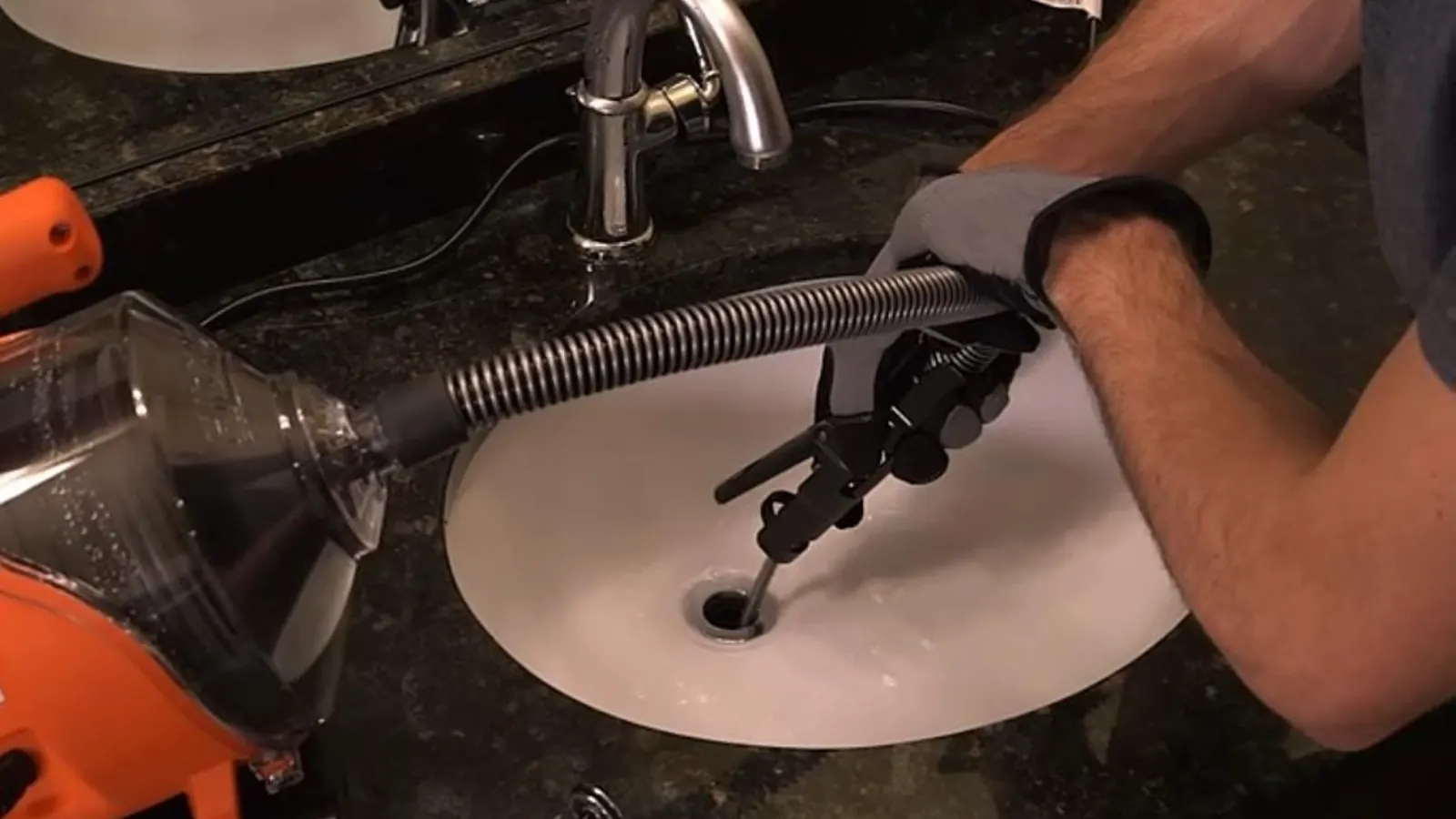
The short answer: what snaking can and cannot do
A drain snake, also called an auger, is a flexible steel cable with a corkscrew tip. You feed it into the drain, turn it to hook or break up the clog, and pull the debris back out. It works best on a clog within the first few feet of pipe, which means hair in a tub, soap scum in a bathroom sink or food residue in a kitchen trap.
It does not work on a coating of grease along the pipe wall, on tree roots in an outdoor line or on a break in the pipe. A cable pokes a hole through those problems, and the hole closes up again within weeks. If your drain clogs repeatedly, the snake is a symptom check and not the cure.
What you need before you start
Gather these first. Most are cheap and a hardware store carries them.
- A hand-crank auger, 15 to 25 feet long, for sinks and tubs
- Rubber gloves and eye protection
- A bucket and old towels for the trap and the floor
- A flashlight, so you can see into the drain opening
- A plastic bag for pulled-out debris
- An old toothbrush to scrub the stopper area
Step by step for a sink or tub
Take your time. Forcing the cable is how pipes get scratched or the cable kinks.
1. Remove the stopper
Lift or unscrew it and clear what you can see by hand. Hair near the opening is often the whole problem.
2. Feed the cable in
Push the tip into the drain until you meet resistance. Tighten the thumbscrew a few inches from the opening.
3. Crank and push gently
Turn the handle clockwise while pushing. When the cable gives, you have reached the clog.
4. Work it back and forth
Pull back a little, crank again and break the clog up. Do not keep forcing a cable that will not advance.
5. Pull the cable out slowly
Wipe it as it comes out. Expect debris and a bad smell.
6. Flush with hot water
Run the tap for a minute. If the water drains fast, you are done.
Toilets are a different tool
A toilet has a curved trap built into the bowl, and a drain snake can scratch the porcelain. The right tool is a closet auger, which has a protective sleeve and a short cable made for the bowl. If a plunger and a closet auger do not clear the toilet, or if other fixtures gurgle when you flush, the clog is farther down the line.
In that case, stop and avoid repeated flushing. Water that cannot leave the pipe has nowhere to go but back up through the lowest opening in the house.
Which tool for which clog
| Clog type | Best first tool | When to stop |
|---|---|---|
| Hair in a tub or shower | Hand auger or drain claw | If it returns within a week |
| Soap and scum in a bathroom sink | Hand auger and a trap cleaning | If the trap is clean and it still drains slowly |
| Grease in a kitchen line | Hot water flush and a short auger | If the sink backs up again, since grease coats the pipe |
| Toilet clog | Plunger, then closet auger | If other fixtures gurgle |
| Slow drains in every fixture | Do not snake. Call a plumber | Always, since the main line is likely involved |
When snaking is the wrong move
If every drain in the house is slow, the problem is in the main line, and a hand auger will not reach it. If a kitchen drain clogs every few weeks, grease or scale is narrowing the pipe. Both cases call for stronger cleaning, which our drain cleaning crews handle, and for stubborn buildup, hydro jetting cleans the full pipe wall instead of poking a hole through it.
Skip chemical drain openers before snaking. If the cleaner does not work, it sits in the pipe and can splash on you when you open the trap. It also damages some older pipes. Mechanical clearing is safer for you and for the plumbing.
Coachella sewer and septic basics before you snake
The City of Coachella's Utilities Department runs the sewer main under the street, and your home's private line connects to it. If neighbors are backing up too, the problem is likely the City's main, and snaking your own drain will not help. The City lists a sewer standby number, (760) 625-6781, for overflows outside regular hours.
Some east valley properties, including many around Thermal, use septic tanks instead of sewer. If you are on septic and several drains are slow, the tank may be full or the drain field may be failing. A snake will not fix that, and you should call a plumber who works on septic systems.
Source types: City of Coachella Utilities Department page and CEQA notice for the East Coachella Valley Sewer Consolidation Planning Project.
Mistakes that damage pipes
The most common is forcing the cable around a tight bend until it kinks or scratches the inside of the pipe. A scratched pipe catches debris and clogs sooner. Another is snaking a fixture with a garbage disposal without disconnecting it first, which can jam the disposal motor. A third is leaving the cable in the pipe and walking away.
If you feel the cable stop hard and will not turn, back it out. That can mean a broken pipe, a collapsed section or a fitting the cable cannot pass. Pushing harder turns a cheap problem into an expensive one.
Common questions
A typical hand auger reaches 15 to 25 feet, enough for most sink and tub branches but not for a main sewer line.
On cast iron or clay, go gently. Aggressive turning can scrape or crack aging pipe, and a camera visit tells you the pipe's condition.
The snake opened a channel, but grease, scale or roots remain on the pipe wall. A stronger cleaning method is needed.
Disconnect the disposal trap first, or clear the clog from the trap side. A cable fed through the disposal can jam it.
Call the City of Coachella Utilities sewer standby line at (760) 625-6781. If only your home is affected, call us.