
Start with the clues you already have
A leak shows itself long before you see water. The first sign is often a bill that climbs for no reason. Others include a hissing sound in a quiet house, a warm spot on the floor, a musty smell, peeling paint, cracked grout and low water pressure. Any one of these deserves a look.
Write down what you notice and when it began. A leak that started after a remodel points to a joint. A leak that appeared after a pressure change points to an older line giving out. This history helps a plumber choose the right method on the first visit.
Four checks you can do in an hour
None of these needs special tools.
Meter check
Turn off everything that uses water. Look at the meter's small low-flow dial. Movement means water is leaving the system.
Toilet dye test
Drop food coloring in each tank and wait fifteen minutes without flushing. Color in the bowl means a leaking flapper.
Irrigation check
Look for soggy patches, mushy ground or unusually green strips near the line between meter and house.
Fixture walk-through
Check under sinks, behind toilets and around the water heater for moisture, rust or stains.
Professional methods and what each finds
| Method | How it works | Best for |
|---|---|---|
| Acoustic | Microphones listen for the sound of water escaping a pressurized pipe | Active leaks in supply lines |
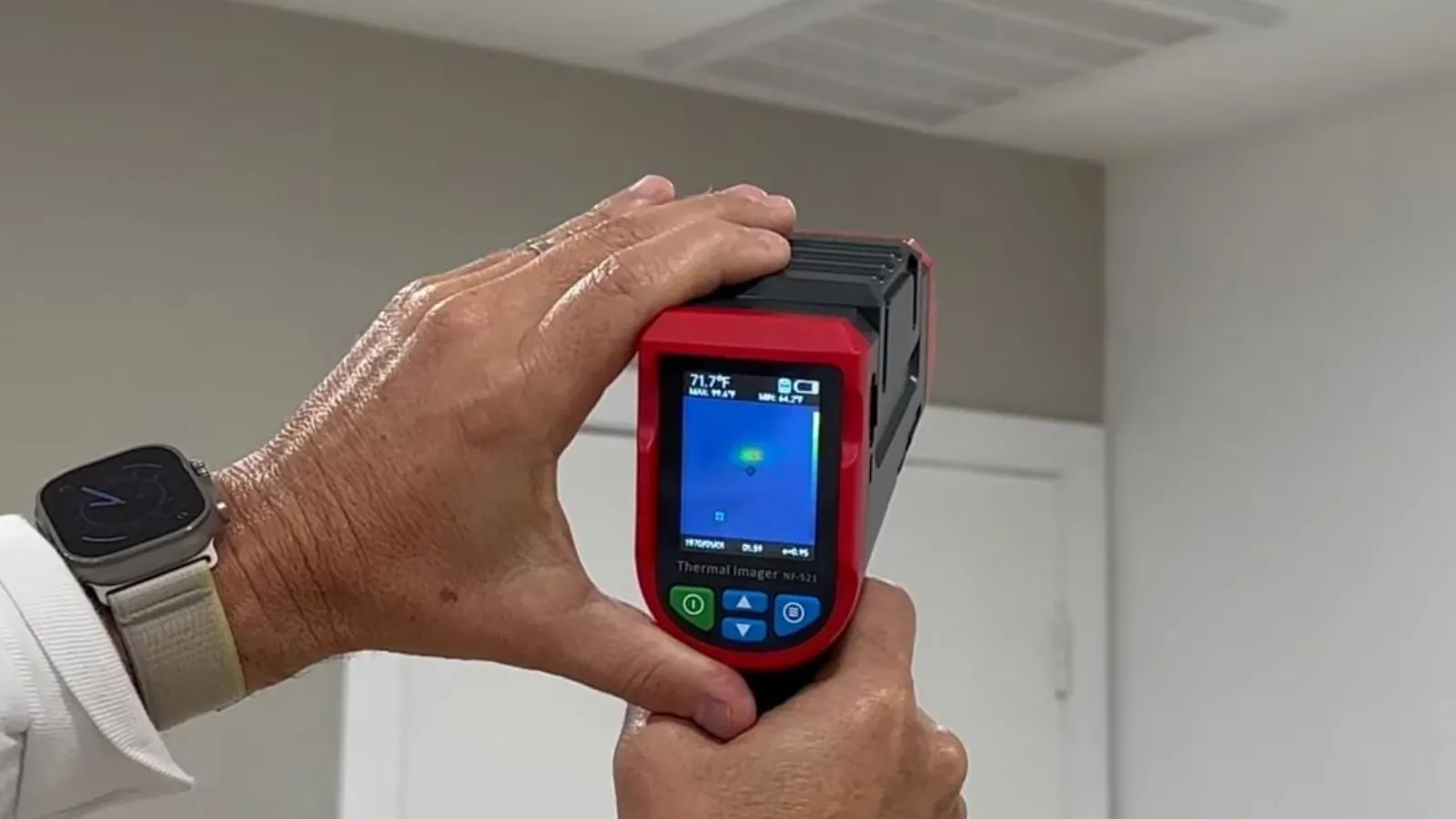
| Thermal imaging | A camera shows temperature differences | Hot water leaks in slabs and walls |
| Tracer gas | A harmless gas escapes through the hole | Quiet or small leaks. See slab leak repair |
| Moisture meter | Reads dampness in walls and floors | Confirming where water has traveled |
| Pressure test | Isolates a line and watches for drops | Narrowing which line is leaking |
Slab leaks and why they hide
Many Coachella homes are built on concrete slabs, and some plumbing runs through or under them. A leak there does not drip into a basement. It saturates soil, lifts flooring or heats a spot on the floor. By the time you see damage, the leak may have been running for weeks.
If you notice a warm patch on tile, a sound of running water with all taps closed or a meter that moves, call for detection promptly. The longer water runs under the slab, the more the soil softens and the bigger the repair.
Using local resources to check your use
The Coachella Valley Water District, which serves much of the valley, publishes conservation information and annual water quality reports. If your home is on a different provider, such as the Indio Water Authority in Indio, ask for the same information. Your provider's customer service line can help you read a meter or review usage history.
If your bill spiked suddenly, ask the provider for a usage history. A jump on a specific date helps you tie the leak to an event, such as a heater swap, a sprinkler change or a freeze-free valve left open.
Source types: Coachella Valley Water District public information and Indio Water Authority 'About Us' page.
When the leak is outside the house
Not every leak is inside the walls. A broken sprinkler valve, a cracked irrigation line or a failing service line between the meter and the house all waste water. The meter test separates the two: close the main valve at the house and see if the meter still moves. If it does, the leak is on the supply side before the house.
A broken service line is the owner's responsibility from the meter to the house. A plumber can locate it, and the repair depends on depth and what is above it. Concrete driveways and landscaping change the cost and the plan.
What to do while you wait for a plumber
Shut off the main valve if you cannot find or control the leak. Move belongings away from wet areas. Photograph the damage for your insurer. Turn off power to wet rooms if you can do so safely. Keep a log of meter readings every few hours, which helps the plumber estimate the leak's size.
If the leak is large or spreading, call right away and use our burst pipe repair steps. Small leaks can wait for a scheduled visit, but they should not wait for months.
Reading your meter like a plumber
Meters show usage in cubic feet or gallons, and many have a small triangle or wheel that spins when any water flows. Take a photo of the reading before you leave for work and another when you return, with nothing running. A difference means water moved through the meter while no one was home.
Do the same overnight. Photograph the meter before bed and again at dawn. Compare the numbers and write the difference on a note. A plumber uses that figure to estimate how large the leak is, which helps decide whether to treat it as urgent or schedule it for the next day.
How leaks damage a home slowly
Water in a wall feeds mold and rots framing. Water under a slab can undermine soil and lift floors. Water in an attic stains ceilings and soaks insulation, which loses its value when wet. These problems do not heal on their own, and the repair bill grows with every week the leak runs.
That is why a small leak is worth a prompt visit. Catching it early often means a short repair and a dried-out cavity, while waiting can mean demolition, remediation and a claim. If insurance is involved, photograph the area before and after any work.
Common questions
Warm floor spots, running-water sounds, a moving meter and unexplained high bills are common signs.
Yes. Color appearing in the bowl without flushing means the flapper leaks.
You can confirm one exists and tell whether it is inside or outside the house. Locating it needs more.
More than most people expect. Even a slow drip adds up to many gallons over weeks.
That line is usually the homeowner's. Call a plumber, and call your water provider to confirm the meter location.